Did you know microbes can produce electricity also?
It is possible to generate electricity from microbes through microbial electricity generation or microbial electrochemical systems (MES). Electrogenic bacteria have the unique ability to transfer electrons outside their cells, allowing for the generation of electrical current. This process is facilitated by specific electron transfer mechanisms and enzymes within their cellular systems. As mentioned earlier, microbial fuel cells (MFCs) harness the electrogenic capabilities of bacteria to generate electricity. By providing a suitable environment for the bacteria to thrive, such as an anode chamber where they can break down organic matter, MFCs can capture the released electrons and convert them into usable electrical energy.

Source: bacteria-crop750.jpg
The ability of microbes to produce electricity has gained attention due to its potential applications in renewable energy, wastewater treatment, and various other fields. Ongoing research is focused on optimizing microbial systems, exploring different types of electrogenic bacteria, and developing new technologies to enhance the efficiency and scalability of microbial electricity generation.
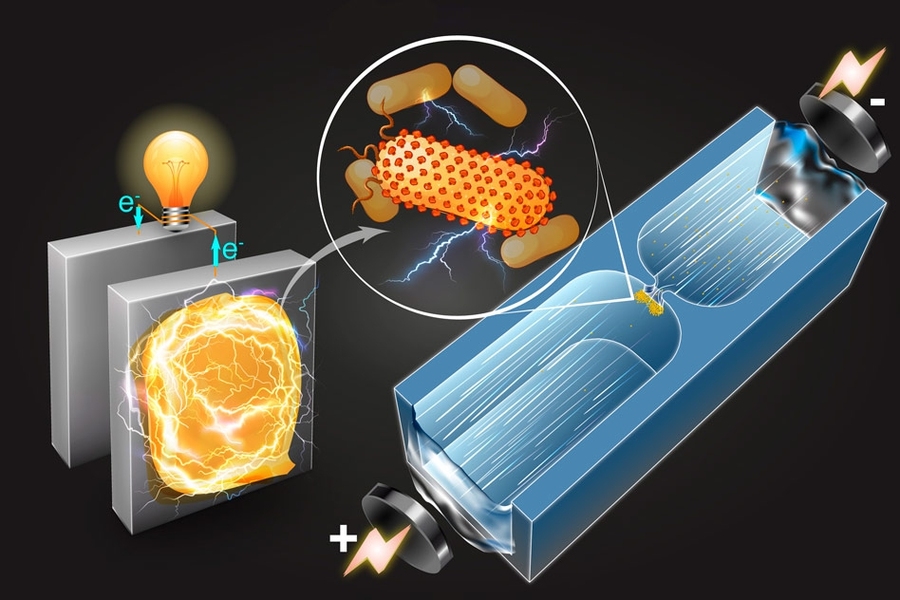
Source: https://news.mit.edu/2019/identifying-electricity-producing-bacteria-0111
Overall, the capacity of microbes to generate electricity presents an intriguing avenue for sustainable energy production and continues to be an active area of scientific investigation.

Comments
Post a Comment